ToxicAmanitaceae
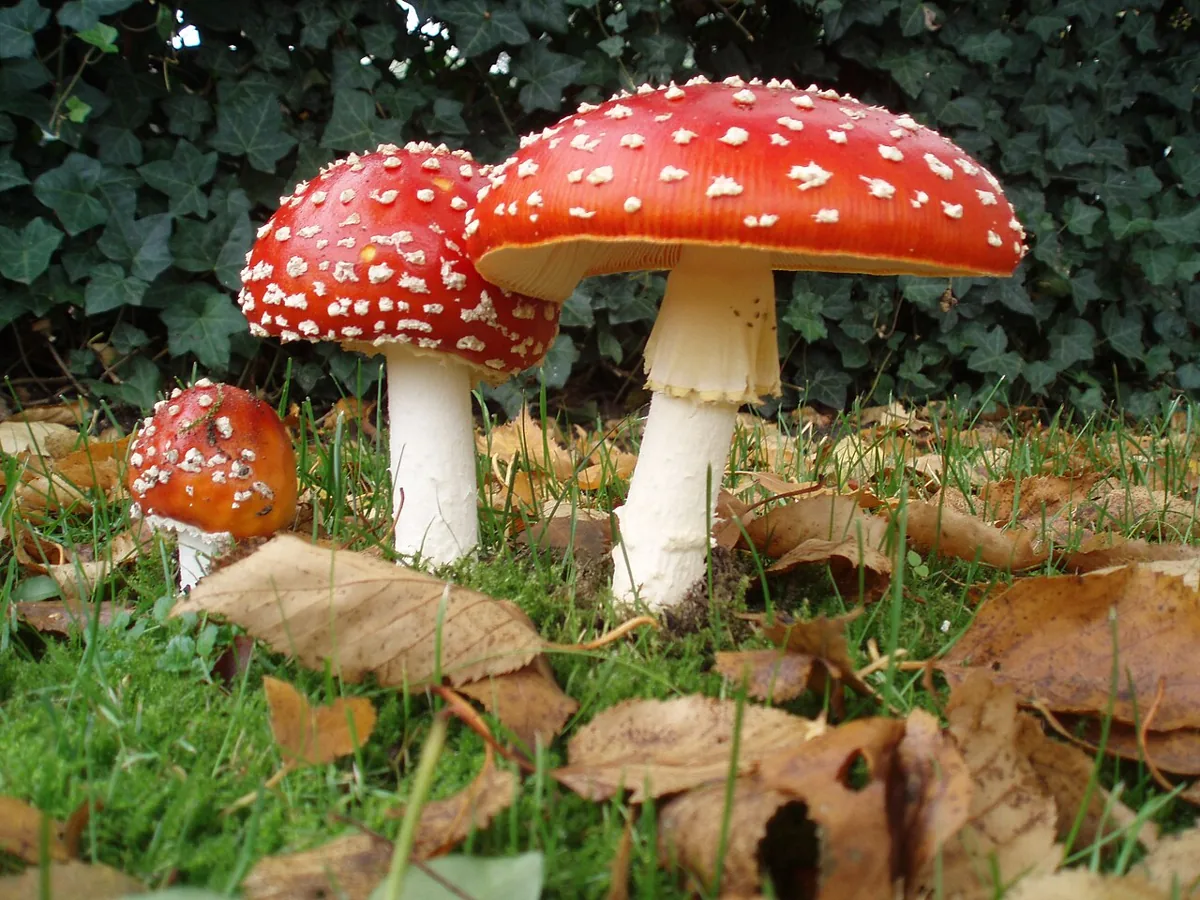
Amanita muscaria
Fly agaric
The iconic red-and-white mushroom; psychoactive but through muscimol, not psilocybin, and genuinely toxic.
- Cap
- Convex to flat, 8-20 cm, scarlet to orange, covered with white warty patches that rain can wash off.
- Gills
- Free, white, crowded.
- Stem
- 80-200 mm, white, with a ring and a bulbous base ringed with scaly rims.
- Flesh
- White.
- Spore print
- White
- Habitat
- Under birch, pine and spruce in a mycorrhizal partnership.
- Distribution
- Throughout the northern hemisphere; introduced to Australia, New Zealand and South Africa.
- Season
- Late summer to early winter.
- Bruising
- None.
- Odour
- Not distinctive.
Key features
- ▪Red or orange cap with white warts
- ▪White gills and white spore print
- ▪Bulbous ringed base
Field tests
- White spore print rules out Psilocybe entirely
Edibility
Toxic. Causes nausea, delirium, sedation and seizures. Not a psilocybin mushroom.
Warning
Frequently mistaken for a safe psychedelic. Ibotenic acid poisoning can be severe, especially in children.
Lookalikes
Russula emetica and other red-capped speciestoxic
Amanita muscaria has white warts, a ring and a bulbous ringed base; Russula has none of these.
Photo and feature-based identification is probabilistic. Never consume a wild mushroom on the basis of an app result — confirm with an experienced mycologist.