Deadly toxicAmanitaceae
Amanita phalloides
Death cap
The deadliest mushroom in the world; responsible for most fatal mushroom poisonings.
- Cap
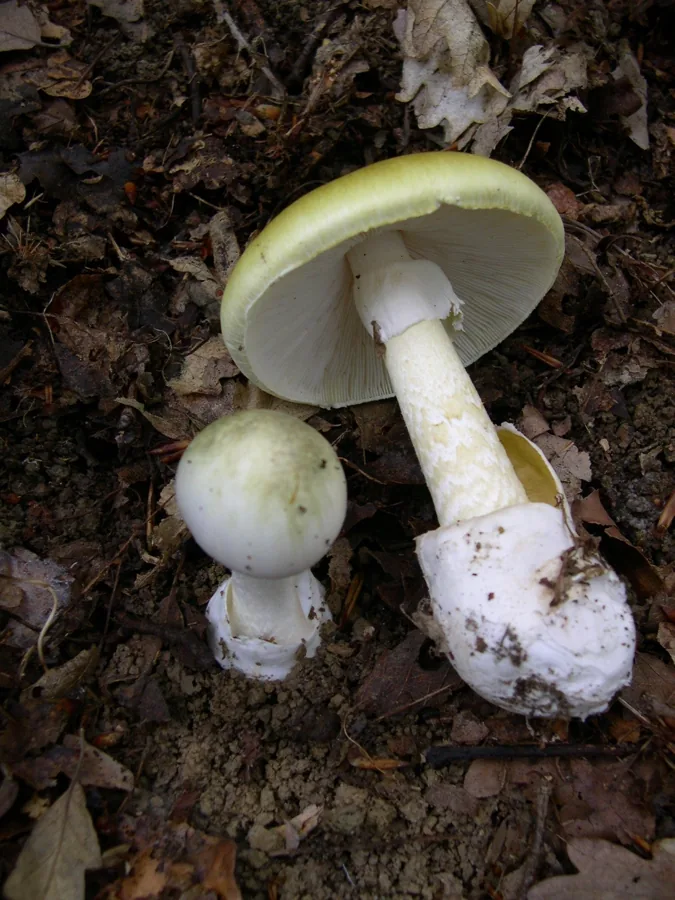
- Convex to flat, 5-15 cm, greenish to olive-yellow with radiating fibrils, sometimes pale.
- Gills
- Free, white, crowded.
- Stem
- 80-150 mm, white, with a skirt-like ring and a white sac (volva) at the swollen base.
- Flesh
- White, unchanging.
- Spore print
- White
- Habitat
- Under oak, beech and other hardwoods, and in urban plantings with imported trees.
- Distribution
- Europe, North America, Australia, New Zealand, North Africa.
- Season
- Late summer to autumn.
- Bruising
- None.
- Odour
- Sweet and sickly with age.
Key features
- ▪White free gills and white spore print
- ▪Skirt-like ring
- ▪Cup-shaped volva at the base - dig it up to see it
- ▪Greenish olive cap
Field tests
- Always excavate the base to check for a volva
- White spore print with a ring plus volva means Amanita
Edibility
Deadly poisonous. Half a cap can kill an adult.
Warning
Amatoxins destroy the liver. Cooking, drying and peeling do not remove them.
Photo and feature-based identification is probabilistic. Never consume a wild mushroom on the basis of an app result — confirm with an experienced mycologist.