Psilocybin-containingHymenogastraceaeAsia
Gymnopilus dunensis
Psilocybin-active Gymnopilus recorded from Punjab province, Pakistan.
Regional status: native
- Cap
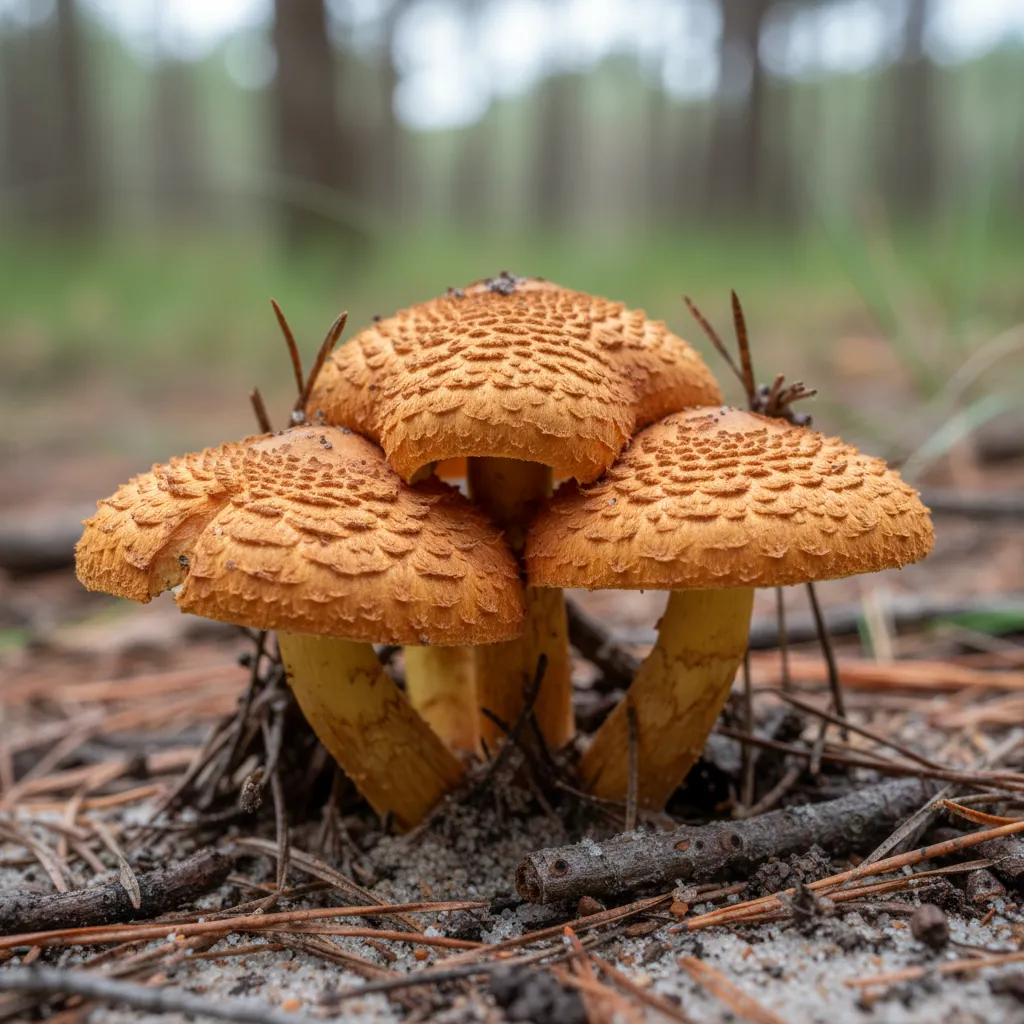
- Orange to rusty-brown, dry and often scaly
- Gills
- Yellow to rusty-orange, close and adnate
- Stem
- Fibrous, with a ring zone in many species
- Flesh
- Thin, often bruising blue where cut
- Spore print
- Rusty orange-brown
- Habitat
- Sand-dune woodland litter and buried wood
- Distribution
- Punjab province, Pakistan
- Season
- Monsoon season
- Bruising
- Some species stain greenish-blue where bruised
- Odour
- Faint, often bitter-smelling
- Potency
- Unknown
Key features
- ▪Found on sand-dune woodland litter and buried wood
- ▪Spore print rusty orange-brown
- ▪Some species stain greenish-blue where bruised
Field tests
- Take a spore print before any identification
- Check for blue bruising on the stem base
- Compare against deadly rusty-spored lookalikes
Edibility
Psilocybin-containing. Not a food species; legal status varies by country.
Warning
Photographs and app results can never establish that a mushroom is safe to eat. Deadly Galerina, Conocybe and Amanita species grow in the same habitats and can look near-identical in the field.
Photo and feature-based identification is probabilistic. Never consume a wild mushroom on the basis of an app result — confirm with an experienced mycologist.