ToxicInocybaceaeEurope
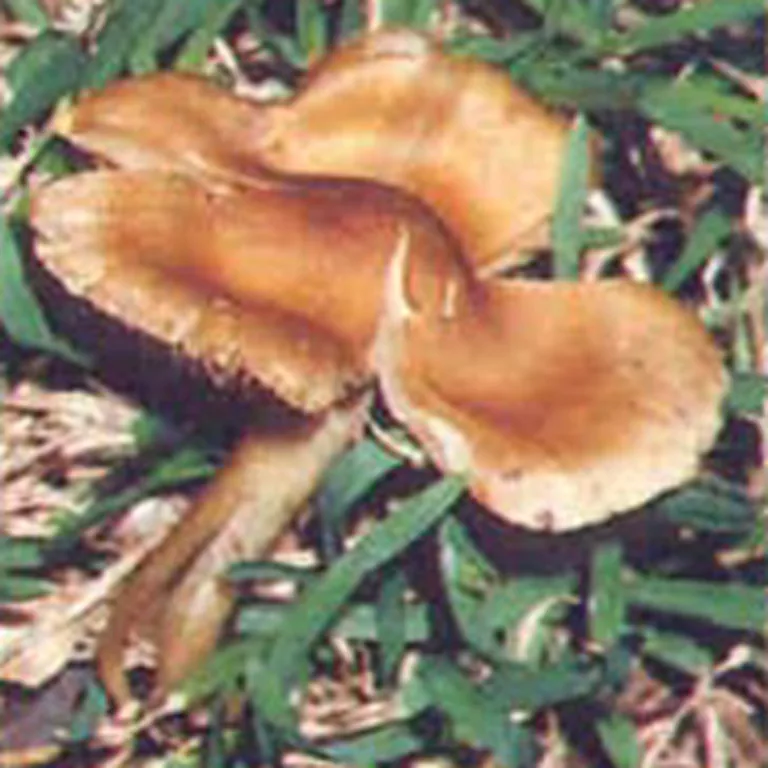
Inocybe aeruginascens
Green-staining fibrecap
One of the very few psilocybin-containing fibrecaps, but the genus is dominated by muscarine-poisonous species.
Regional status: Native to central Europe
- Cap
- Conical to convex, 15–40 mm, pale straw to ochre, radially fibrillose, often splitting at the margin.
- Gills
- Adnexed, whitish then clay-brown.
- Stem
- 25–60 mm, whitish, with green-blue staining towards the base.
- Flesh
- Whitish, staining greenish.
- Spore print
- Dull clay-brown
- Habitat
- Sandy soil, poplar, willow and lime plantings, paths and dunes.
- Distribution
- Germany, Hungary, Poland, the Netherlands and neighbouring central Europe.
- Season
- May – September
- Bruising
- Distinct green to blue-green staining on the stem base.
- Odour
- Spermatic to earthy
- Potency
- Uncertain
Key features
- ▪Radially fibrillose silky cap
- ▪Green-blue staining at the stem base
- ▪Clay-brown, not purple, spore print
Field tests
- Clay-brown spore print separates Inocybe from Psilocybe
- Radial fibres on the cap are a genus-level warning sign
Edibility
Contains psilocybin and aeruginascin but sits in a genus full of muscarine-poisoning species.
Warning
Do not treat any fibrecap as safe. Most Inocybe species cause severe muscarine poisoning and several are potentially fatal.
Photo and feature-based identification is probabilistic. Never consume a wild mushroom on the basis of an app result — confirm with an experienced mycologist.