Psilocybin-containingBolbitiaceaeAustralia
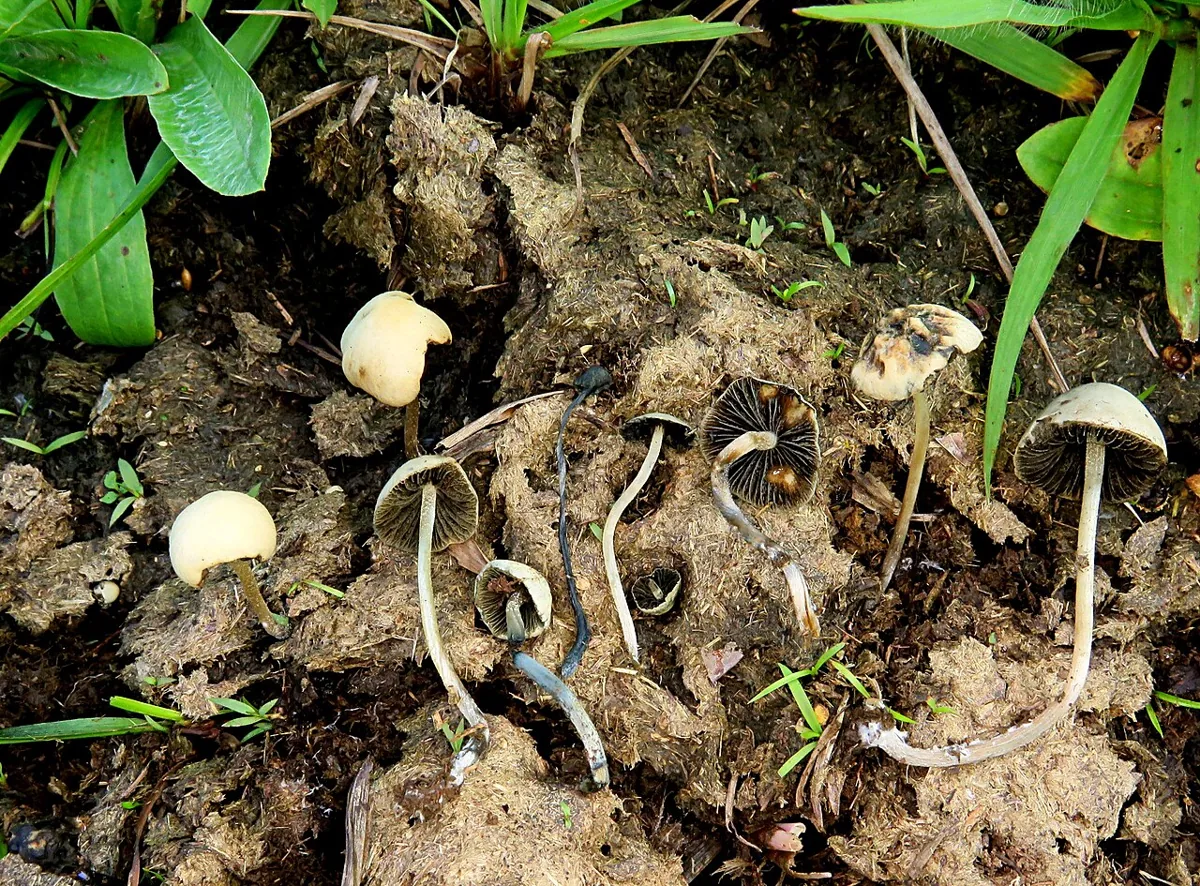
Panaeolus cyanescens
Blue meanie
Pale, dung-loving tropical species with black spores and strong bluing.
Regional status: Pantropical; established in northern Australia
- Cap
- Hemispheric to flat, 1.5-4 cm, light grey to off-white, often cracking in dry weather.
- Gills
- Mottled grey turning jet black.
- Stem
- 40-120 mm, thin, pale grey to yellowish, bruising blue.
- Flesh
- Blues strongly.
- Spore print
- Jet black
- Habitat
- Cattle and horse dung in tropical and subtropical pasture.
- Distribution
- Pantropical: Hawaii, Southeast Asia, Central and South America, Australia, Africa.
- Season
- Warm, wet months.
- Bruising
- Strong blue where handled.
- Odour
- Faintly mushroomy.
- Potency
- Very potent
Key features
- ▪Off-white cap that cracks when dry
- ▪Jet black spore print, not purple-brown
- ▪Mottled gills
- ▪Grows on dung
Field tests
- Spore print must be jet black
- Handle the stem and look for blue
Edibility
Contains psilocybin and psilocin, often at higher levels than P. cubensis.
Warning
Other pale dung Panaeolus are inactive; Conocybe on dung can be deadly.
Lookalikes
Pholiotina rugosa (deadly conocybe)deadly
Deadly ringed Conocybe grows on manured ground; rusty spore print and a ring rule out Panaeolus.
Panaeolus papilionaceusharmless
Also on dung with black spores, but it never bruises blue and has a toothed cap margin.
Photo and feature-based identification is probabilistic. Never consume a wild mushroom on the basis of an app result — confirm with an experienced mycologist.