Psilocybin-containingHymenogastraceaeSouth America
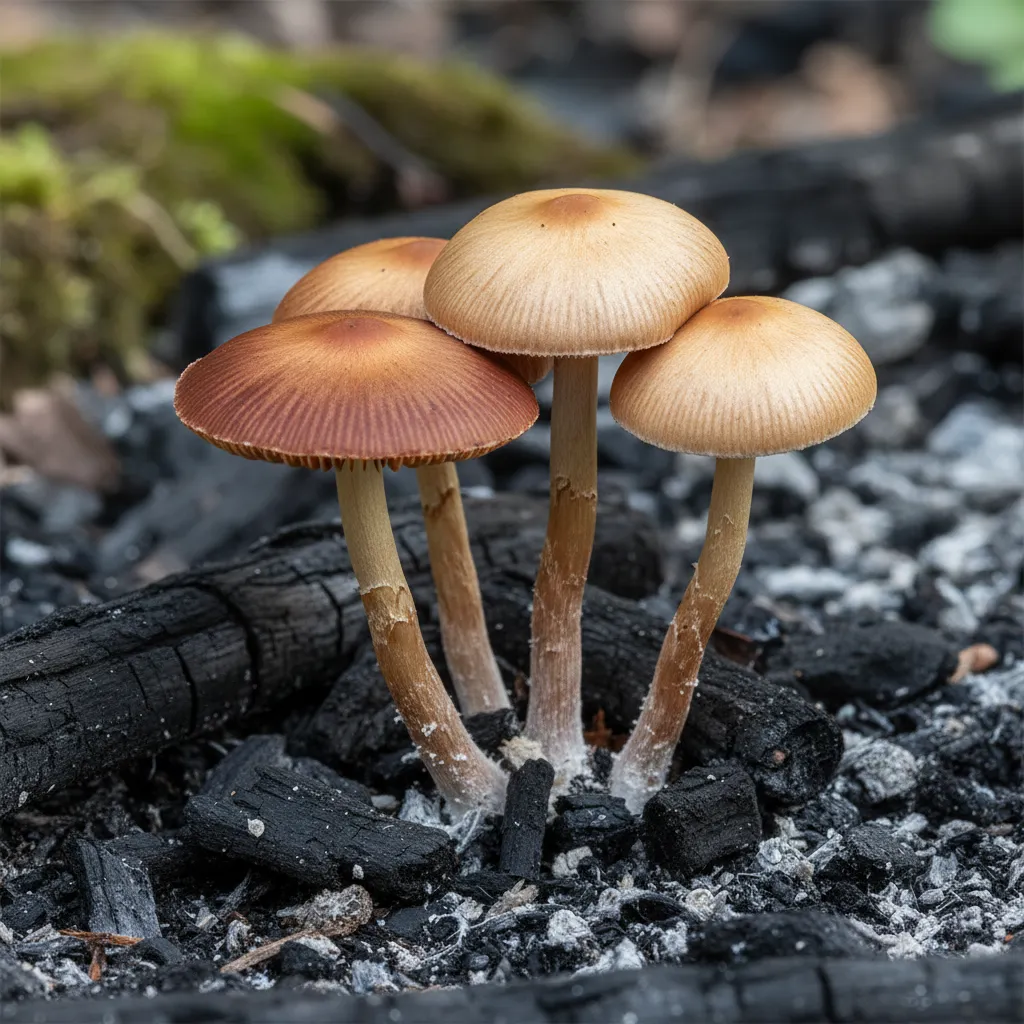
Psilocybe carbonaria
Psilocybin-active Psilocybe recorded from Chile and southern South America.
Regional status: native
- Cap
- Cap hygrophanous, brown fading paler as it dries
- Gills
- Adnate to adnexed, grey-brown darkening with the spores
- Stem
- Slender, fibrous, often bluing at the base
- Flesh
- Thin, often bruising blue where cut
- Spore print
- Dark purple-brown
- Habitat
- Burnt ground and old fire sites
- Distribution
- Chile and southern South America
- Season
- Autumn
- Bruising
- Bruises blue to blue-green where handled or damaged
- Odour
- Farinaceous
- Potency
- Unknown
Key features
- ▪Found on burnt ground and old fire sites
- ▪Spore print dark purple-brown
- ▪Bruises blue to blue-green where handled or damaged
Field tests
- Take a spore print before any identification
- Check for blue bruising on the stem base
- Compare against deadly rusty-spored lookalikes
Edibility
Psilocybin-containing. Not a food species; legal status varies by country.
Warning
Photographs and app results can never establish that a mushroom is safe to eat. Deadly Galerina, Conocybe and Amanita species grow in the same habitats and can look near-identical in the field.
Photo and feature-based identification is probabilistic. Never consume a wild mushroom on the basis of an app result — confirm with an experienced mycologist.