Psilocybin-containingHymenogastraceaeNorth America
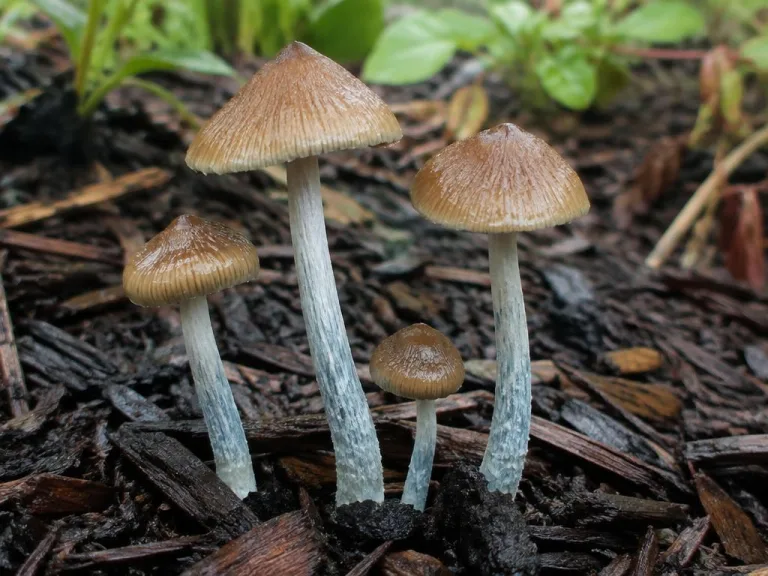
Psilocybe cyanofibrillosa
Rhododendron psilocybe
Pacific coastal species of mulched gardens and riverbank brush, named for the blue fibrils on its stem.
Regional status: Native to the Pacific Northwest coast
- Cap
- Convex to flattened, 10–40 mm, cinnamon to tawny brown, hygrophanous.
- Gills
- Adnate, pale brown then purple-brown.
- Stem
- 30–60 mm, whitish with conspicuous blueing fibrils.
- Flesh
- Whitish, blueing.
- Spore print
- Dark purple-brown
- Habitat
- Wood chips, mulch, sandy riverbanks and rhododendron beds.
- Distribution
- Coastal Oregon, Washington and British Columbia.
- Season
- September – December
- Bruising
- Blue-green on stem fibrils and cap edge.
- Odour
- Farinaceous
- Potency
- Moderate
Key features
- ▪Blue fibrils along the stem
- ▪Coastal mulch and riverbank habitat
- ▪Hygrophanous tawny cap
Field tests
- Purple-brown spore print
- Rub the stem to reveal blue fibrils
Edibility
Psilocybin-containing; not a food species.
Warning
Galerina marginata shares mulch habitat and is deadly. Check the spore print every time.
Photo and feature-based identification is probabilistic. Never consume a wild mushroom on the basis of an app result — confirm with an experienced mycologist.