Psilocybin-containingHymenogastraceaeUKEurope
Psilocybe fimetaria
Dung-loving psilocybe
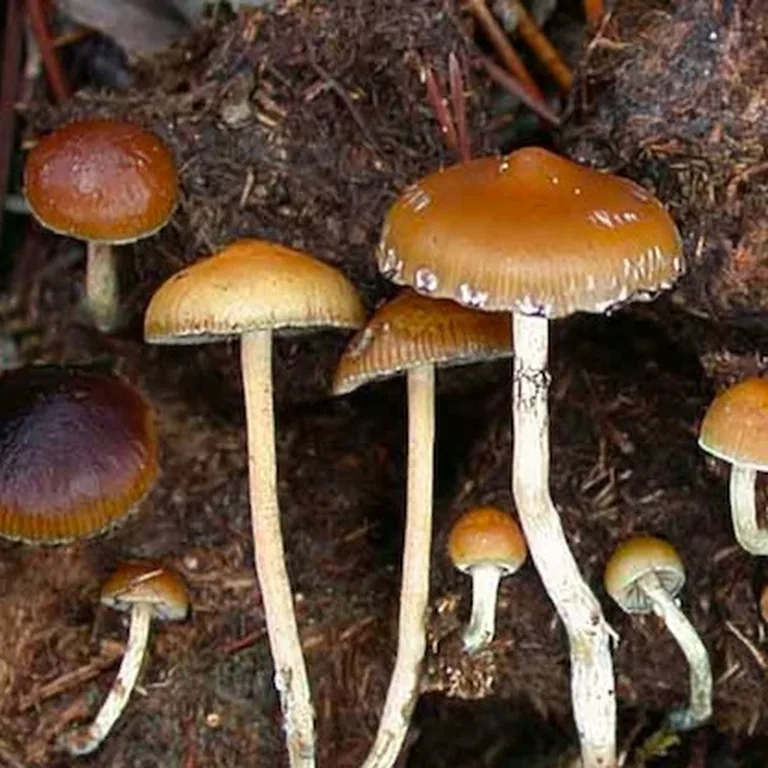
Small blueing dung and pasture species of UK and European grassland, with a fine cobwebby ring zone.
Regional status: Native across the UK and northern Europe
- Cap
- Conical to bell-shaped, 8–25 mm, buff to olive-brown, hygrophanous, often with a small umbo.
- Gills
- Adnate, pale greyish then dark purple-brown with whitish edges.
- Stem
- 30–70 mm, whitish, blueing at the base, with a fibrillose ring zone and white mycelium threads.
- Flesh
- Thin, whitish, blueing where cut.
- Spore print
- Dark purple-brown
- Habitat
- Rich grassland, horse and cow dung, manured pasture and lawn edges.
- Distribution
- United Kingdom, Ireland, northern and central Europe; also recorded in North America.
- Season
- August – December
- Bruising
- Blue to blue-green on the stem base and where handled.
- Odour
- Farinaceous
- Potency
- Moderate
Key features
- ▪Cobwebby ring zone on the stem
- ▪Blue stem base
- ▪Grows in manured grass, often near dung
Field tests
- Check for a purple-brown spore print, not rusty brown
- Scratch the stem base and wait for a blue reaction
Edibility
Psilocybin-containing; not a food species.
Warning
Small brown dung mushrooms include deadly Galerina and Pholiotina species. Never eat on appearance alone.
Lookalikes
Photo and feature-based identification is probabilistic. Never consume a wild mushroom on the basis of an app result — confirm with an experienced mycologist.