Psilocybin-containingHymenogastraceaeAsia
Psilocybe samuiensis
Thai psilocybe
Small potent Thai species of paddy-field soil, first described from the island of Koh Samui.
Regional status: Native to South-East Asia
- Cap
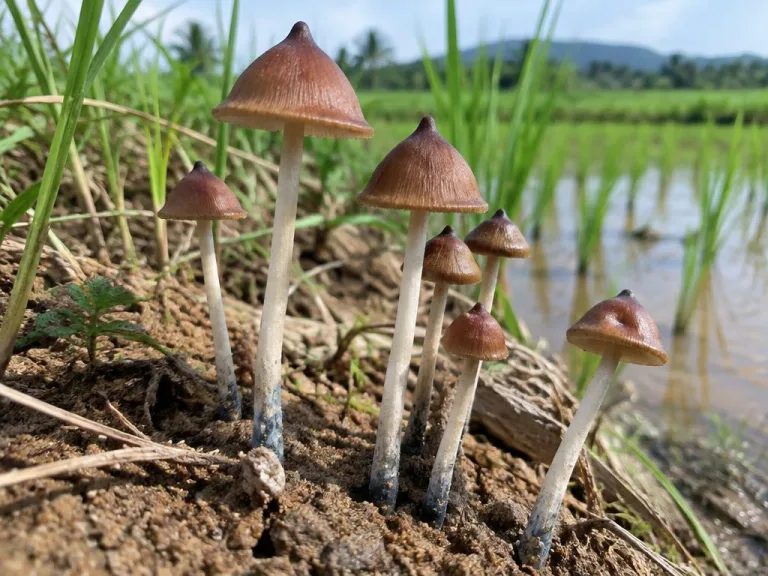
- Conical to convex, 7–25 mm, reddish brown with a distinct papilla, drying straw.
- Gills
- Adnate, pale brown then violet-brown.
- Stem
- 40–65 mm, slender, whitish, blueing at the base.
- Flesh
- Thin, blueing.
- Spore print
- Dark purple-brown
- Habitat
- Sandy clay soil of rice paddies and well-manured fields.
- Distribution
- Thailand and neighbouring South-East Asia.
- Season
- Monsoon season
- Bruising
- Blue at the stem base and where damaged.
- Odour
- Farinaceous
- Potency
- Strong
Key features
- ▪Papillate reddish-brown cap
- ▪Paddy-field soil habitat
- ▪Slender blueing stem
Field tests
- Purple-brown spore print
- Blue reaction at the stem base
Edibility
Psilocybin-containing; not a food species.
Warning
Small brown paddy mushrooms include toxic species; a photograph cannot establish safety.
Photo and feature-based identification is probabilistic. Never consume a wild mushroom on the basis of an app result — confirm with an experienced mycologist.